

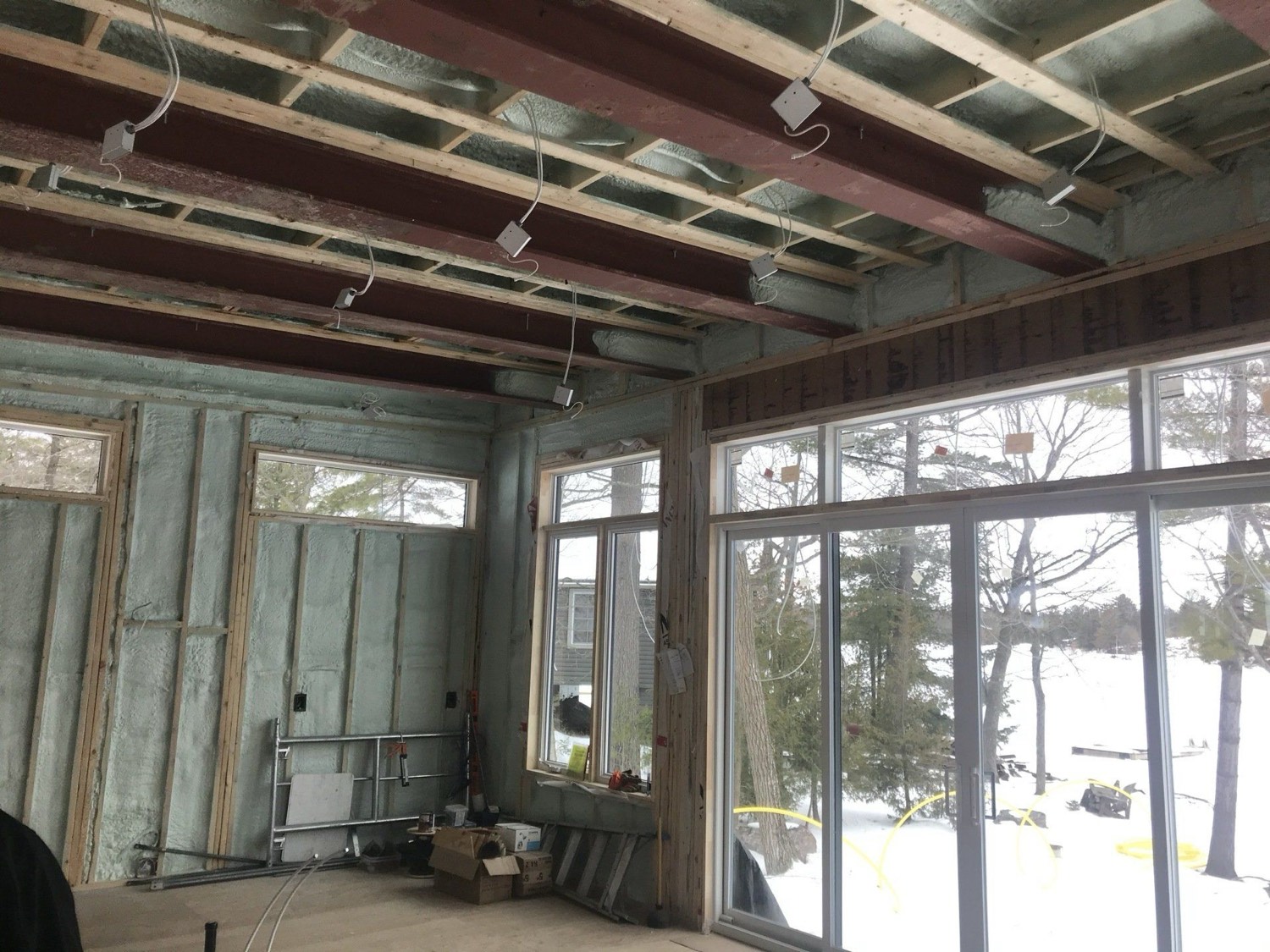
Spray Foam Insulation
The product we spray, the standard we install it to, and every place it goes to work.
Learn about spray foamSeven Orillia homes in ten were built before 1991
That makes foam here mostly a retrofit: fitted into a basement, a rim joist or a ceiling that people already live under, by CAN/ULC-S705.2 certified applicators who drive up from Barrie.
Most requests we get for spray foam insulation in Orillia are not about a new build. They come from people living in a house that went up in the 1950s, 60s or 70s and still has the original basement, the original rim joists and an attic that has settled for decades. The 2021 census from Statistics Canada counts 14,425 occupied private dwellings in Orillia. Of those, 4,510 were built in 1960 or before, and another 3,855 between 1961 and 1980.
Put those together and 58 percent of Orillia’s homes predate 1981. Add the 1980s and the figure reaches 70 percent. Only about one Orillia home in ten was built in 2011 or later. Our own FAQ notes that current Ontario attic targets run far deeper than what most pre-1990s houses actually have, and in Orillia that describes most of the city.
So a page about foam in Orillia is really a page about putting foam into a house that is finished, furnished and occupied. That is a different job from spraying an open stud wall on a new subdivision lot, and the rest of this page is about what changes.
The housing stock
The age curve of a city decides which insulation jobs show up. Orillia’s is weighted heavily toward the oldest end.
Read the chart from the top. The two red bars, everything up to 1980, outnumber every later decade put together. Orillia is also a city of houses more than apartments: the same census counts 8,035 single-detached houses among 14,420 occupied dwellings, and 8,825 of 14,425 households own the place they live in. For most Orillia owners, then, an insulation decision is a decision about an old detached house.
The census also records 945 Orillia dwellings that need major repairs. That number matters to us for a plain reason: when a house needs work on its structure, roof or plumbing, the insulation plan has to wait for it, or be fitted around it. We would rather know that on the first visit than find it with the rig already running in the driveway.
In a lived-in house
In an older Orillia home there is rarely an open wall to spray. Foam goes where the structure is still exposed, or where nothing else fits.
The band of framing sitting on top of the foundation wall is usually reachable from an unfinished basement, and in older houses it is often bare. Foam seals and insulates it in one pass.
If you are planning to finish an Orillia basement, the time to foam the foundation walls is after framing and before drywall. Afterwards means tearing it out again.
Where part of an Orillia house sits over a crawl space, foam on the crawl space walls deals with the cold floor above and the ground damp below.
A rafter bay that was never deep enough for the batt it needed is a common find in an older house. Closed-cell foam gets more R-value into the depth that is there.
A bedroom built over an unheated space is the classic cold floor. Opened up from below, the floor can be sealed and insulated properly.
Before any attic top-up, the gaps around chimneys, top plates and wiring holes should be sealed. Foam does that job; the depth on top is usually blown-in.
City of Orillia
Whether your foam job needs a permit in Orillia depends less on the foam than on what it is part of. The City of Orillia’s Building Permits and Inspections page lists the work that needs a permit, including new construction, additions, major renovations, structural changes, plumbing and HVAC. It lists painting, flooring and non-structural repairs among the work that does not. Insulation on its own is not named on either list, so if you are spraying a bare rim joist in an unfinished basement and nothing else, the honest advice is to call the building division at 705-329-7258 and ask.
Finishing a basement is clearer. The City publishes a separate application guide, form BD.F.407, for finishing a basement in a house. It asks for scaled floor plans showing room names, ceiling heights, window and door sizes, smoke and carbon monoxide alarms, heating outlets and the type of wall and ceiling finish in each room. Applications go in through the City’s online public portal or by email to building@orillia.ca.
Once a permit is open, the order of inspections decides when we can spray. Orillia lists an air barrier system inspection, where the air barrier must be continuous and sealed across the building envelope, and an insulation and vapour barrier inspection that happens before finishes and drywall go up. At normal thicknesses closed-cell foam is part of both: it is insulation, air barrier and vapour retarder in the same layer. Each inspection has to be booked at least 48 hours ahead through the portal or by emailing inspections@orillia.ca, so we plan the spray day around that window rather than the other way round.
Then there is the cover. The Ontario Building Code, in Article 9.10.17.10 of Division B, requires foamed plastic insulation in a building to be protected from the interior by a thermal barrier such as drywall. In an Orillia basement that is being finished, the drywall already planned usually does that job. In a basement that is staying unfinished, it is a real line item, and we flag it in the quote so the inspection holds no surprises.
Paying for it
An older home is where the provincial money is aimed. Save on Energy and Enbridge Gas, with support from the Government of Ontario, run the Home Renovation Savings program. Its published page lists insulation rebates of up to $7,700 and air sealing rebates of up to $250, and it is open to homes heated with electricity, natural gas, oil, propane or wood. The bundled path begins with a home energy assessment; single upgrades can be done without one.
We are careful here for a reason. Programs like this change their terms, amounts and end dates, and we would rather not publish a promise that has expired by the time you read it. Check the program’s own site before you plan around it, book any required assessment before work starts, and ask us on the phone what we know is current for Orillia homes.
From Barrie to Orillia
We do not have an Orillia office, and we will not pretend to. We are based in Barrie and work across Simcoe County, and Orillia is one of the communities we list by name. The spray rig travels with the crew, so every Orillia quote is done at your house and every job is sprayed on site.
The first visit
An old house tells you most of what it needs if somebody gets into the basement and the attic. These are the questions that decide an Orillia quote.
Batt, loose fill, vermiculite or nothing at all. Vermiculite stops the plan until it is tested.
In an unfinished basement we can usually see it from below and tell you straight away whether it was ever sealed.
If a basement finish is on the way, foam belongs between the framing and the drywall, inside the City of Orillia permit’s inspection order.
Foam left open in a lived-in space needs a thermal barrier. Whether that is drywall or something else goes in the quote.
Closed walls and open attic floors usually do. Each area is priced with the product that suits it.
It depends on what else is happening. The City of Orillia’s published list of work that needs a permit names new construction, additions, major renovations, structural changes, plumbing and HVAC; it does not name insulation on its own. Finishing a basement is different: the City has a separate permit guide for it, and the permit’s inspection sequence includes an air barrier inspection and an insulation and vapour barrier inspection before drywall. If you are unsure, the Orillia building division answers at 705-329-7258 or building@orillia.ca.
Usually at the edges, not the middle. In older houses the places we find open are the rim joists and headers, crawl spaces, rooms over unheated space and ceilings too shallow to hold enough batt. Those are spray foam jobs. Big open attic floors and closed walls are usually better and cheaper with blown-in, and we will say so when we look.
Not without opening them. Spray foam goes onto an exposed surface. For a finished wall we use BIBS drill-and-fill instead: 2-inch access holes, usually from inside, the cavity blown full, then plugged and patched.
The Home Renovation Savings program, run by Save on Energy and Enbridge Gas with the Government of Ontario, lists insulation rebates of up to $7,700 and air sealing up to $250, and its bundled path starts with a home energy assessment. Programs like this change, so check the current terms before you plan around one, and ask us what we know when you call.
You stay out of the area being sprayed during application and until the manufacturer’s re-entry period is over. We tell you that time for your job before we start. On most occupied houses, for a basement or an attic, people are back inside the same day.
Yes. We are based in Barrie, and Orillia is one of the Simcoe County communities we name as part of our regular area. The quote visit is free: we come to the house, get into the basement, crawl space or attic, and give you a written, itemized price.
Keep reading
The product we spray, the standard we install it to, and every place it goes to work.
Learn about spray foam
When the old material has to come out before anything new goes in, and what happens to vermiculite.
Learn about removal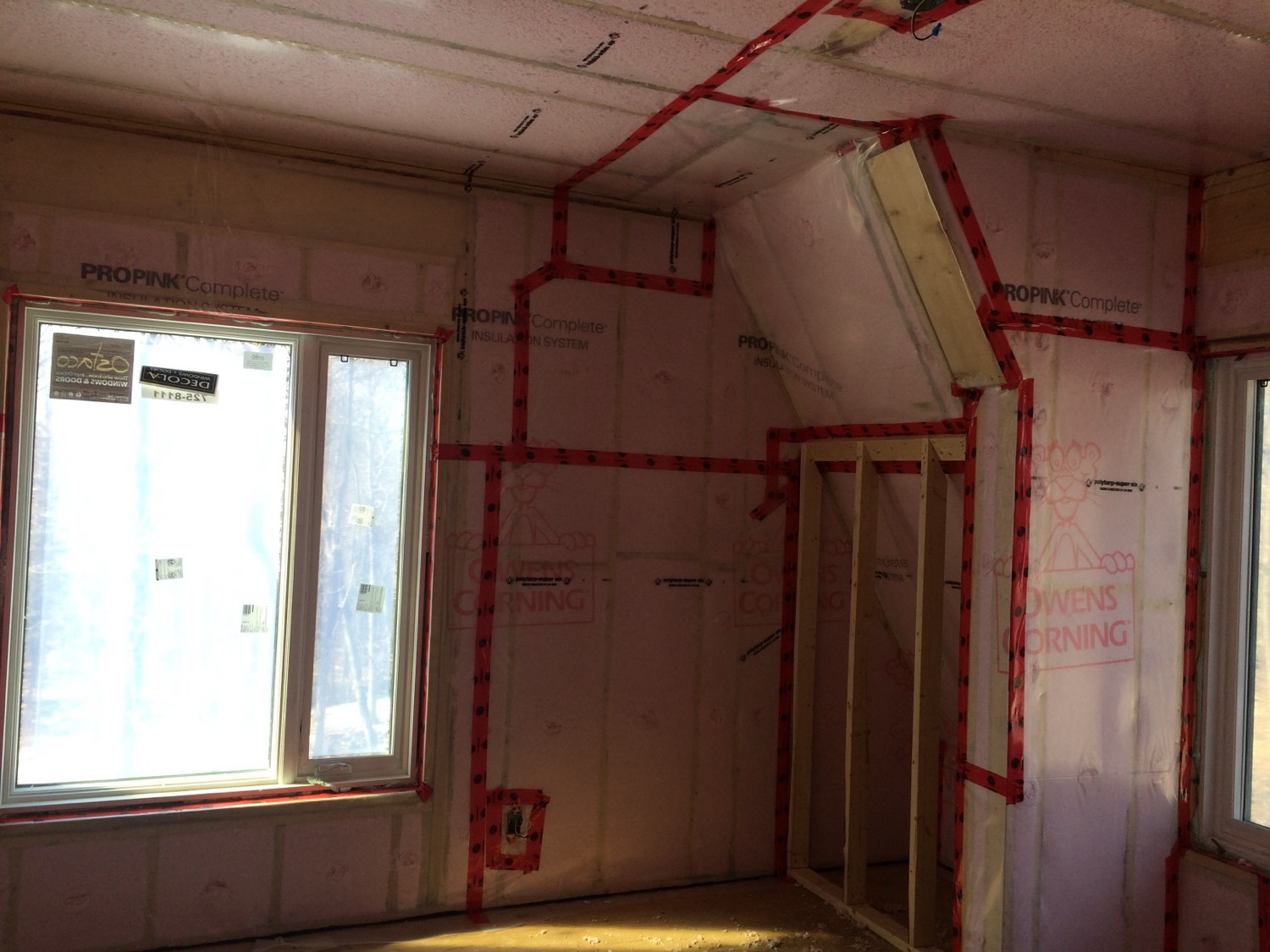
Drill-and-fill for the finished walls of an older home, where spray foam cannot reach.
Learn about blown-in