

Attic Insulation Rebates
Most of the money is lost before anybody climbs the ladder.
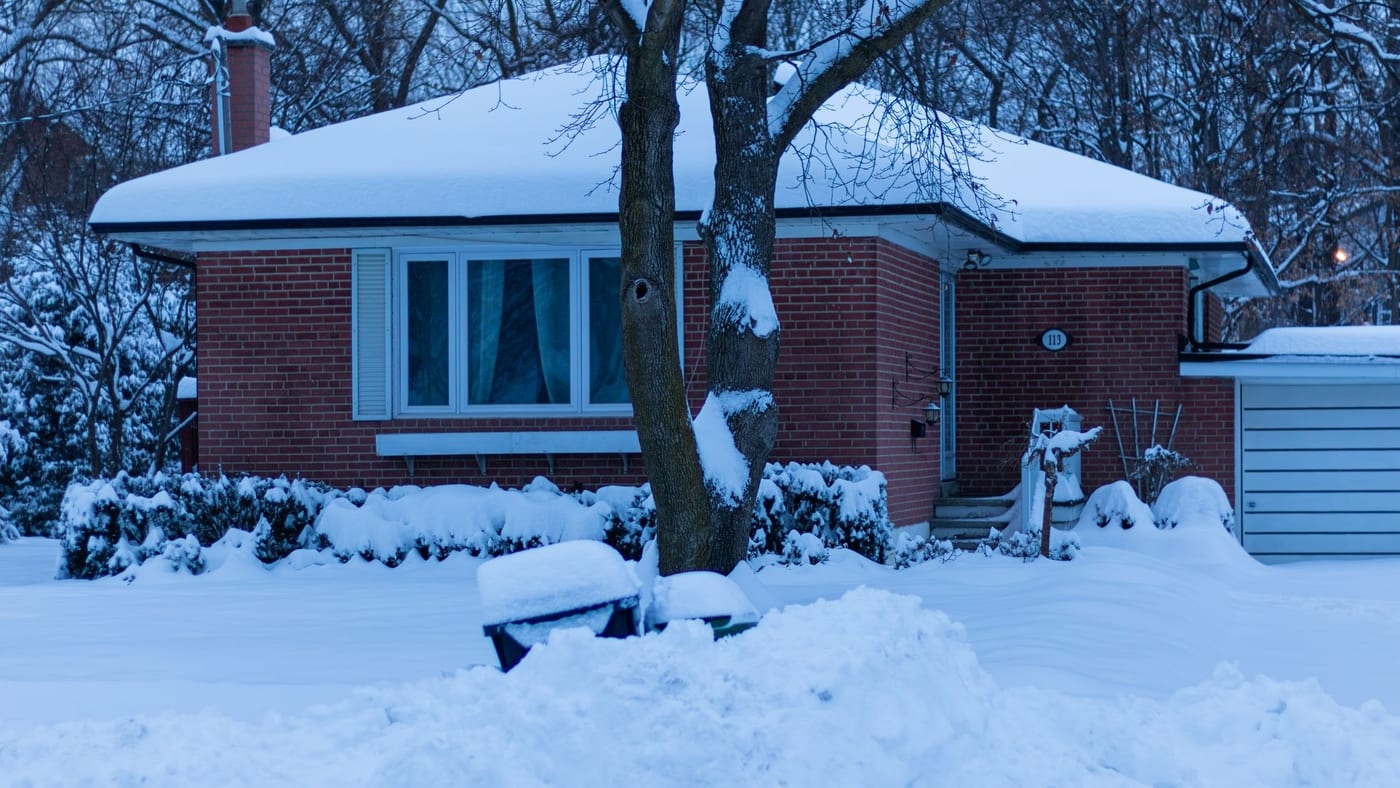
Attic insulation rebates in Ontario are real money, and the easiest way to lose one is to book the work before you have picked a path. The program has two, they pay different amounts, and each has a step that cannot be done afterwards.
Everything below is from the program's own published pages as of November 2026. Programs like this change, so check the current terms before you plan around a number, and ask us what we know when you call.
Who runs it, and who can apply
The main program is Home Renovation Savings, run by Enbridge Gas and Save on Energy with support from the Government of Ontario. It was announced by the IESO in February 2025, and it is not only for gas customers.
For the attic rebate, the program's page says you need to:
- Own the home.
- Either be an Enbridge Gas customer who heats mainly with a natural gas furnace or boiler, or be on the Ontario electricity grid and heat with electricity, oil, propane or wood.
- Live in a detached house, a semi, a row or townhouse (not stacked), or a mobile home on a permanent foundation. New builds occupied six months or less are out.
- Not have already received an attic insulation rebate from Enbridge Gas, Save on Energy, the province or the program.
That puts attic insulation rebates within reach of most houses in Barrie, gas-heated or not.
Attic insulation rebates without an energy assessment
The simpler path is a single upgrade with no home energy assessment. The amount depends on how much insulation is up there now, and every tier asks you to reach at least R-50 across 100% of the roof assembly:
- Existing attic at R-12 or less, brought to R-50: up to $1,250.
- Existing attic over R-12 and up to R-25: up to $1,000.
- Existing attic over R-25 and up to R-35: up to $800.
Cathedral ceilings and flat roofs have their own lower tiers, $750 and $650, with lower R-value targets.
The catch is the installer. On this path the contractor fills in the application and does the install, and the contractor has to be one of the participating contractors listed on the program's form. Registration for new contractors on that stream is closed. The program also says that if attic work was started with a contractor who is not participating, the home is not eligible. So if this is the path you want, check the list before you book anybody, us included.
The assessment path pays more and lets you choose
The second path starts with a home energy assessment and asks for at least two upgrades. The attic amounts are higher here:
- R-12 or less, brought to at least R-50: $1,500.
- Over R-12 and up to R-25: $1,200.
- Over R-25 and up to R-35: $900.
Air sealing can be one of the upgrades, worth $200 for meeting the target or $250 for beating it by 10% or more. Across walls, foundation, exposed floors and the attic, the program lists insulation rebates of up to $7,700 on this path. A third qualifying upgrade adds another $500, and a $600 rebate offsets the cost of the two assessments.
The program's own page says to have your preferred contractor complete the work. The list you are handed on this path is of Service Organizations, for the energy assessment, not of installers.
The order that keeps attic insulation rebates on the table
This is the step that is easiest to get wrong. The assessment path runs in a fixed order, and the program is explicit that the first assessment comes before any work starts:
- Book the first assessment. The program gives you a list of Service Organizations in your area, and a registered energy advisor assesses the house.
- Read the report and choose at least two upgrades. Air sealing is usually best as the third, according to the program, to keep the rest eligible.
- Have the work done. By the contractor you choose.
- Book the final assessment with the same advisor. Rebates are paid after it and the paperwork are complete: up to 30 days by e-Transfer, up to 60 by cheque.
Start the attic first and call the advisor after, and the bundle is gone. The program says work started before the first assessment is not eligible for those rebates.
Why the starting depth decides the cheque
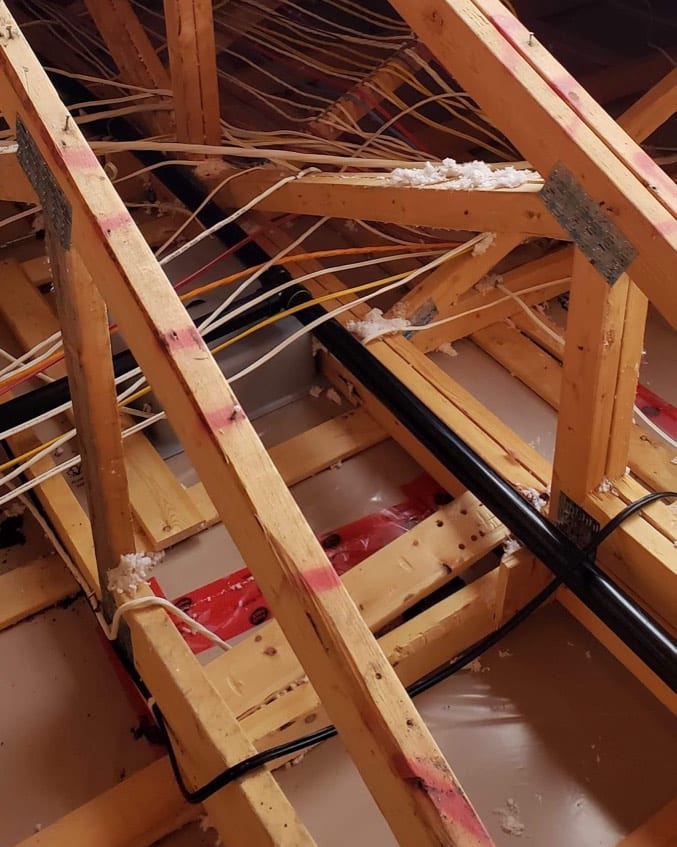
Both kinds of attic insulation rebates pay by the R-value you start from. An attic at R-12 earns the top tier; the same attic called R-30 drops two tiers. So the starting number matters, and it is rarely what the house was built with.
Insulation settles. In a lot of older Barrie homes, the attic layer that went in decades ago has settled to half its original depth, and current Ontario attic targets are far deeper than what most homes built before the 1990s have. We measure what is up there before we quote, rather than going by what the house was supposed to have.
One thing to check before anyone disturbs it. If the old attic fill is vermiculite, it may contain asbestos and has to be tested before any work starts. That comes before the rebate paperwork, not after.
Seal before you add depth
The rebate pays for R-value. The house needs air sealing as well, and the order matters more than the depth.
R-value only measures conduction. It says nothing about air leaking through gaps, and in most Ontario houses the leaks are the larger problem. Piling insulation on top of an unsealed attic floor is like putting a thicker sweater on with the zipper down. Warm, humid indoor air escaping into a cold attic carries both heat and moisture with it, which is how you get frost on the sheathing, damp insulation and ice damming at the eaves. The ice damming post covers that part on its own.
So the gaps around chimneys, top plates, wiring holes and fan housings get sealed first, and the depth goes on after. On the assessment path, air sealing can earn its own rebate as well.
The cheaper material usually qualifies
Attic insulation rebates ask for an R-value, not a product. That matters for what you pay on top of the rebate.
On a big open attic floor, depth is cheaper with blown-in than with foam. Foam does the sealing where it is needed; the depth on top is usually blown-in, brought up to a current, even depth with markers so the coverage can be checked. For large open attic areas, blown-in gives you most of the real-world performance gain for a lot less than foam. If a cheaper product will do the same job in your house, we will tell you.
If the old insulation is wet, mouldy or full of droppings, it has to come out before anything new goes on top. Our insulation removal work clears the attic, corrects what caused the damage, and re-insulates to current Ontario Building Code. The top-up or removal post walks through how to tell which situation you are in.
Attic insulation rebates for a Barrie house
Barrie's housing stock spans about seventy years, and the attic rebate tiers line up with it. Homes built before the 1980s commonly have a thin attic layer that has since settled to half its original depth. Homes from the 1990s and 2000s usually have batts, often with the air sealing skipped. Which tier any one house lands in is a measurement, not a guess by decade, and an attic already above R-35 sits outside every attic tier. Better to know that before booking an advisor.
Add a Georgian Bay snow belt winter and the wind off Kempenfelt Bay, and the difference between an attic that was insulated and one that was insulated properly shows up on the heating bill every February.
Where we fit
The terms of attic insulation rebates change, so we do not publish a promise that expires. What we can do is get into the attic, measure what is actually there, and give you a written, itemized quote with the reasoning behind each recommendation, priced by area, product and access. That is useful whichever path you take: it tells you roughly which tier you are in before you commit to anything. We are based in Barrie and have worked here for more than 15 years, and we would rather look at your house than quote you a number from a brochure. See blown-in insulation for how an attic top-up runs.
Want to know where your attic sits before you book an advisor? Call (705) 812-1955 or request a free quote.