

Crawl Space Insulation
A warm floor starts underneath it.
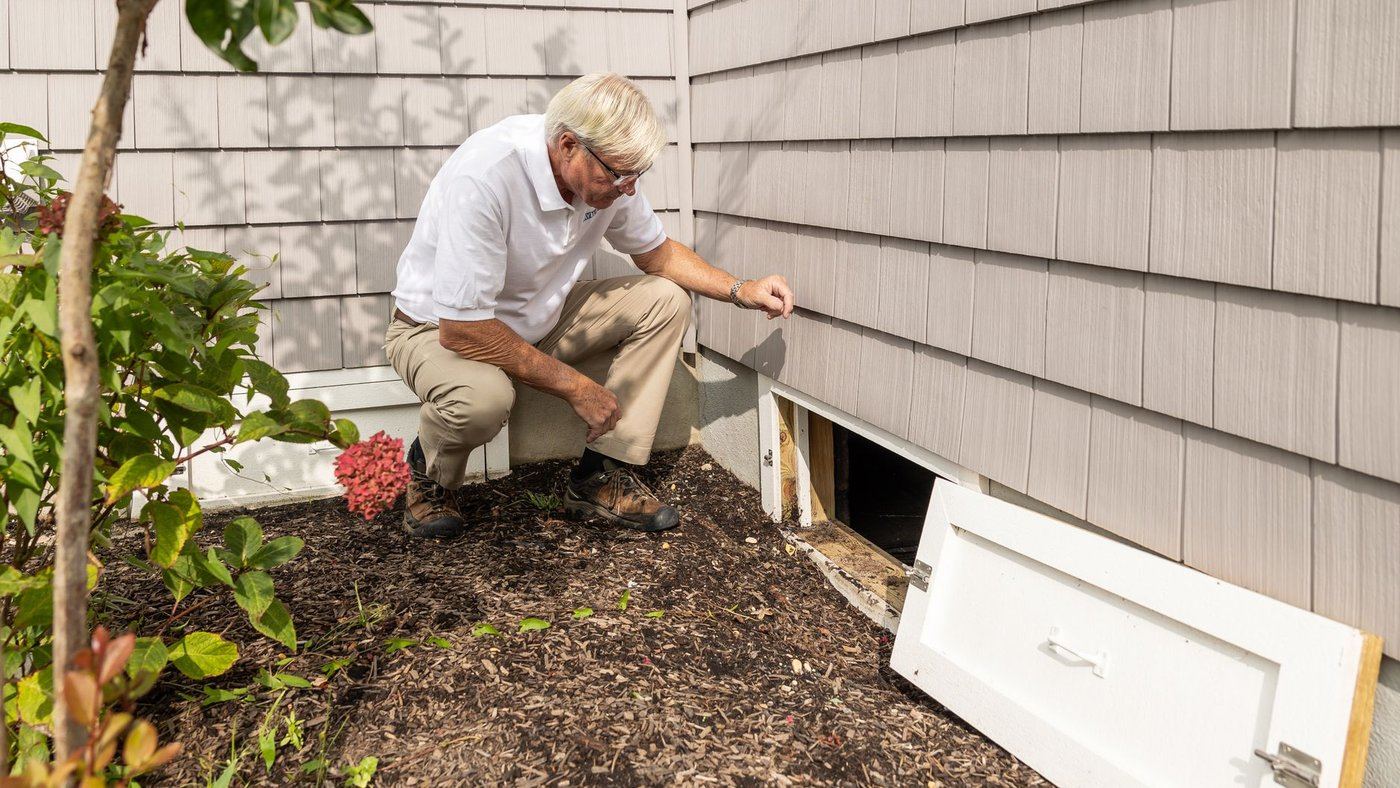
Crawl space insulation is usually the answer to a complaint about the room above it: the floor is cold from November to April, the furnace runs and runs, and a rug only moves the cold somewhere else.
Most people go looking for the fix in the floor, because that is where they feel it. Most of the time it belongs on the walls of the crawl space instead, with the ground underneath covered first. Here is why, and what has to happen down there before any insulation goes in.
Two ways to insulate a crawl space
Natural Resources Canada's renovation guide, Keeping the Heat In, puts it simply. You can insulate the walls of the crawl space, which turns it into a heated space, or you can insulate the floor above it, which keeps the heat in the house and leaves the crawl space cold.
Both sound reasonable. They behave very differently in a Kawartha Lakes winter.
- Insulate the walls, and the crawl space becomes a short basement. The pipes, the ducts and the underside of your floor all sit on the warm side.
- Insulate the floor, and everything below the insulation is now outdoors in all but name: the water lines, the drain, the ducts, and the ends of the floor joists where they sit on the foundation.
Why crawl space insulation usually goes on the walls
NRCan recommends the walls, and gives reasons a homeowner can check for themselves. Insulating the walls means you don't have to insulate and protect every pipe and duct in the space. Walls are usually easier to reach than the ceiling of a tight crawl space, especially where the joists are unevenly spaced. And walls take less material than the floor above them.
The guide is blunter about the floor-only route. Insulating between the joists and leaving the crawl space cold can lead to frozen pipes, frozen ground and rot at the joist ends. Its advice is to use floor insulation only together with insulation on the foundation walls, never on its own.
That is the trade most people don't see coming. A floor packed with insulation feels warmer for the first winter. Then a line freezes in February, in the one place in the house nobody wants to crawl to.
Start with the ground, not the crawl space insulation
Bare earth gives off moisture all year. Put crawl space insulation on the walls over a dirt floor and you have built a warm, damp room under your house. So the ground gets covered before anything else.
NRCan's minimum is 0.10 mm (4 mil) polyethylene, overlapped, caulked and taped at the seams. It is fastened mechanically to the walls and around anything it can't go over, like the posts holding up the floor, and sealed to any moisture barrier on the walls. A few smooth boards keep it from billowing. If people will be crawling over it, a strip of plastic floor mat protects it. The guide says not to cover it with sand or gravel.
Two more things come before the ground cover. Fix any water getting in: a crawl space that floods every spring needs that solved first. And never vent a clothes dryer into a crawl space.
The vents: open, closed, or gone
Many older crawl spaces, and most cottage ones, have vents to the outside. What to do with them depends on which kind of crawl space you are building.
If the walls are insulated and the space is heated, NRCan says it still needs some ventilation, but generally not vents to the exterior, because of the risk of condensation building up in summer. Tie it into the house's ventilation or run a dehumidifier, and seal the old vents permanently if you are doing the whole job.
If the floor is insulated as well and the space runs cooler, the guide sets vents at 1 square unit of vent area per 500 of floor area, opened for spring and plugged and insulated for winter, with the space checked at least once a month.
The rim joist is the leak you can feel
Where the floor framing sits on the foundation there is a band of wood running all the way round the house, and in most crawl spaces it is the single biggest gap. Crawl space insulation that skips it leaves the draft where it was. NRCan calls air tightness at the rim critical and names polyurethane foam as the way to seal it. If you have ever felt a draft along the bottom of a wall, this is often where it starts. The rim joist post goes into it on its own.
Pipes, heat trace and a backup heater
If any pipes end up on the cold side, NRCan says to tape the duct seams and insulate every duct and water line in the crawl space, and then warns that even insulated pipes can freeze if the space drops below freezing. It suggests self-regulating electric heat trace on the water lines, and a small heater on a thermostat as a safety net. Those are jobs for a plumber and an electrician, not the insulation crew, but they should be planned alongside the crawl space insulation, not after it.
One more risk the guide names: if the floor of the crawl space is lower than the ground outside, frost can push the foundation walls inward. Keep water away from the walls and, where the footings are shallow, the guide says to insulate on the outside so the walls and the soil under them stay warmer.
Crawl space insulation under a cottage near Bobcaygeon
Around Bobcaygeon and the rest of the Kawartha Lakes, the job is very often a cottage that was never built for winter and is now being used year-round. Under the floor, those buildings tend to share the same problems: an open or vented crawl space, a floor exposed to the outdoors, and no air barrier anywhere.
The four-season cottage post covers the whole building. For the floor, the order is the same as above: water away from the foundation, ground covered, rim sealed, walls insulated, vents dealt with, and pipes protected if anything is still on the cold side.
When the crawl space insulation has to go in the floor
Some cottages don't have a crawl space at all. They sit on posts or piers with the floor open underneath. NRCan's advice for an open foundation is to insulate between the joists, put the vapour barrier above the insulation on the warm side, seal it well against air, and protect the insulation from wind, insects and animals. Another option it gives is building an insulated skirt around the foundation, which turns the open space into a heated crawl space.
Foam, batts, and when the cheaper one is fine
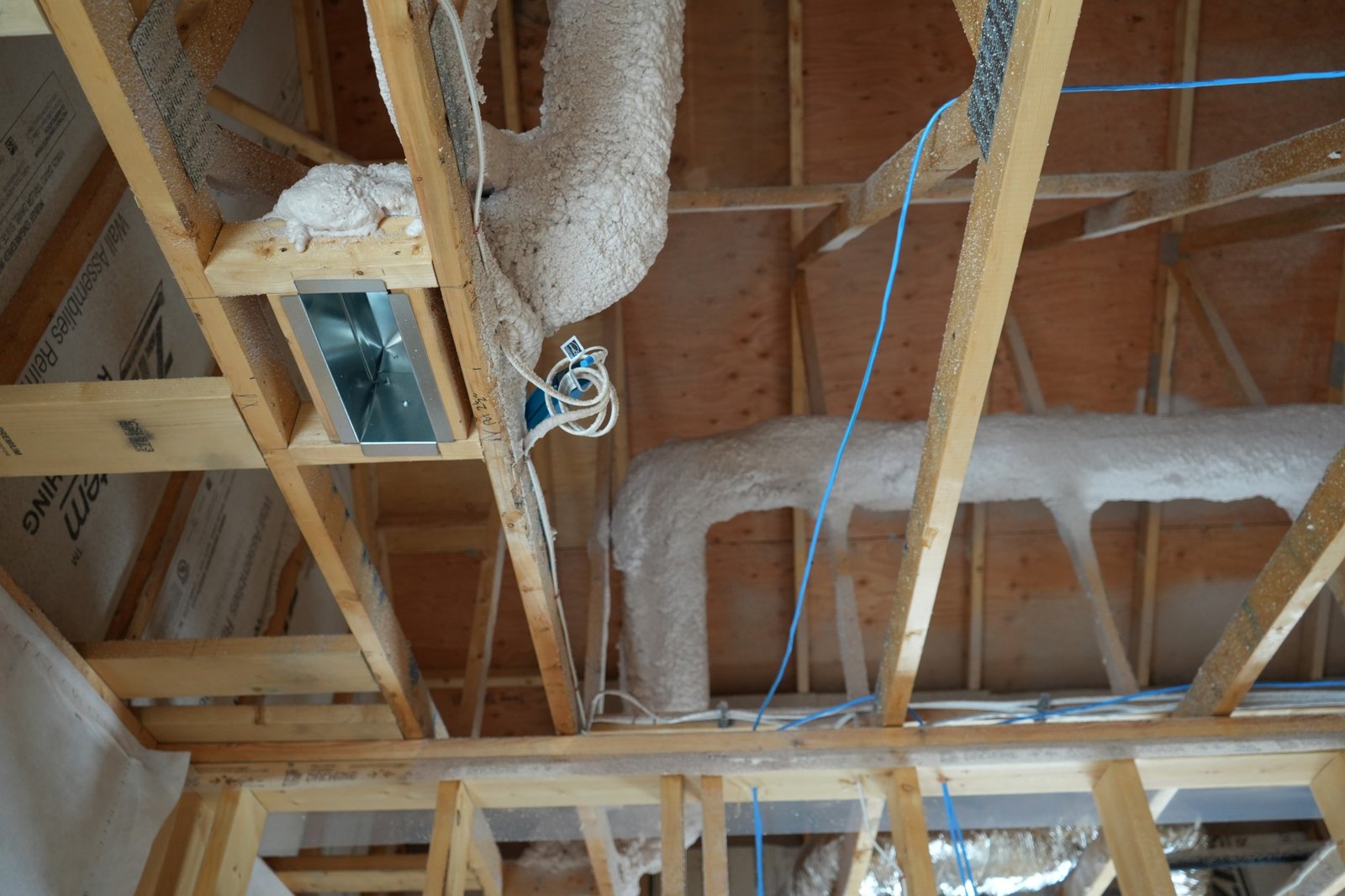
For the walls and the rim of a crawl space, closed-cell spray foam is often the right tool. It is insulation, air barrier and vapour retarder in one application, it gets roughly R-6 per inch, and it seals an irregular surface like an old block or rubble foundation. In a crawl space it seals out ground moisture, cold and pests, and stops the cold floor above it. We spray Polarfoam 7300-0 SOYA, installed under CAN/ULC-S705. See spray foam insulation for how a foam job runs.
Foam in a living space has to be covered by a thermal barrier under the Ontario Building Code. Whether your particular crawl space needs a covering is something NRCan says to ask your building inspector about, and it belongs in the quote rather than being found out at inspection.
Foam isn't the answer to every crawl space, though. Where the floor really is the right place, as under an open foundation, batts between the joists do the job for less. We install them in floors over crawl spaces, supported so they can't droop, which is how floor insulation fails when it is just pushed up between the joists and left. Most houses end up with a mix: foam where it seals and outperforms, and a cheaper product where it does the same job.
If there is old insulation down there already
Plenty of older houses already have crawl space insulation, and it is often hanging down in sheets, damp, or chewed up by mice. Damp, fallen and rodent-damaged material under the floor is one of the things our insulation removal crews deal with. We vacuum it out, disinfect, fix what caused it and re-insulate to current code. Whatever ruined the first lot, a leak or a way in for mice, is usually still there, and it only shows once the old material is out.
Where we fit
An open new-build attic and a cramped 1950s crawl space are different jobs at the same square footage, which is why we price by area, product and access. We get into the crawl space to see what is actually there, tell you which parts need work and which don't, and tell you if a cheaper product will do the same job. We work across the Kawartha Lakes, Bobcaygeon included, and we would rather look at your house than quote you a number from a brochure.
Cold floor over a crawl space? Call (705) 812-1955 or request a free quote.