

Spray Foam Attic Insulation
Most attics need foam in a few square feet, not the whole roof.
Spray foam attic insulation is the right answer in fewer attics than most people expect. The part of it nearly every attic does need is small, and it sits where you'll never see it: the gaps in the ceiling below.
If you're reading this because the bedrooms upstairs won't hold heat, or because there's ice along the eaves again, the fix probably isn't foaming the whole roof. Usually it's foam in a few places and a lot of something cheaper on top.
Spray foam attic insulation means two different jobs
Quotes use the same words for two jobs that have very little in common. Our spray foam insulation page puts it in one line: spray the roof deck to bring the attic inside the building envelope, or seal the attic floor and its bypasses before topping up.
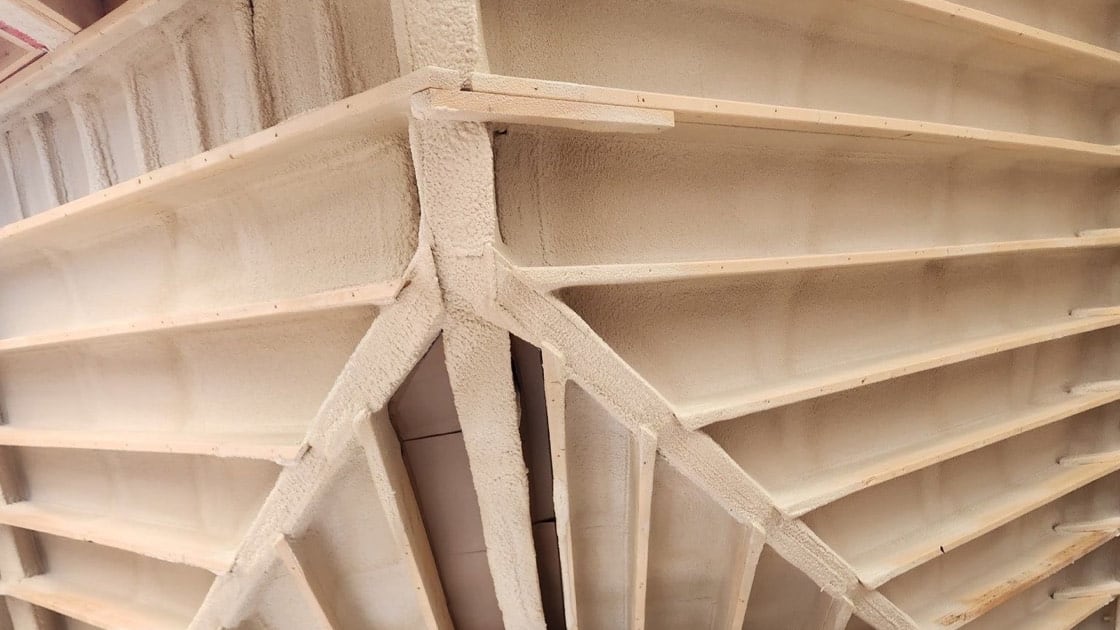
- Foam on the roof deck. The underside of the roof is sprayed between the rafters, and the attic becomes part of the heated house. Every square foot of the roof gets foam.
- Foam on the attic floor. Foam goes where the house leaks into the attic: the top plates, the holes for wiring and plumbing, the boxes for ceiling lights. Then loose-fill is blown over the whole floor to depth, and the attic stays a cold, vented space.
Those two jobs differ a lot in size. A pitched roof has more surface than the ceiling it sits over, and the roof-deck job covers all of it. The floor job foams a small fraction of the ceiling area and covers the rest with a product that costs much less.
Why most attics don't need foam everywhere
The heat you're paying for mostly doesn't seep through the insulation. It rides out on air. Our spray foam page says most of the heat leaving a house leaks out through gaps, top plates, rim joists, penetrations and attic bypasses, carrying moisture with it. Warm, damp air that reaches a cold attic drops that moisture on the first cold surface it finds. And heat leaking up under a snow-covered roof is what melts the snow that refreezes as ice at the eaves.
Loose-fill on its own doesn't stop that air. Our FAQ says piling material on an unsealed attic floor is like putting on a thicker sweater with the zipper down. Air sealing comes first, and insulation depth comes second.
Where spray foam attic insulation earns its cost on the floor
This is the cheapest version of the job, and it does the most per dollar. Closed cell foam is insulation, air barrier and vapour retarder in one pass, so a few inches of it closes a leak and insulates it in a single step. On an attic floor it goes on:
- The top plates of the interior and exterior walls, where drywall meets framing and the gap runs the length of the house.
- Penetrations for wiring, plumbing stacks and bath fan ducts.
- Ceiling light boxes and anything else cut through the ceiling below.
- Dropped soffits and chases, where a hidden space opens straight into the attic.
- The eave edge. Down at the eaves the roof comes close to the top plate and there's very little depth. At roughly R-6 per inch, foam gets real R-value into a space too shallow for anything else. That's where ice dams usually start.
The product we spray is Polarfoam 7300-0 SOYA, a 2 lb closed cell foam, installed by certified applicators under CAN/ULC-S705.2.
When blown-in is the better buy
Once the floor is sealed, the depth is a different job, and foam is rarely the best product for it. A large, open, dry attic with a walkable floor and room for full depth is the textbook case for loose-fill. Our blown-in insulation page says it straight: for large open wall and attic areas, blown-in gives you most of the real-world performance gain for a lot less than foam. We blow it to a current, even depth and put up depth markers so you can see what's there.
Full-depth spray foam attic insulation across that same floor buys R per inch you don't need, in a space with plenty of inches. If a cheaper product will do the same job in your house, we will tell you. We would rather have the referral than the upsell.
That's why the attic line on our quotes usually reads the same way: air seal the bypasses first, then blow to a current, even depth.
When spray foam attic insulation belongs on the roof deck
Some roofs have no attic floor to work from, or no room on it. That's where foam on the underside of the deck is the right tool, not an upgrade:
- Cathedral and vaulted ceilings. The rafter bay is the whole insulation space. Our spray foam page says it plainly: high R-value in a shallow rafter cavity, where batts simply cannot reach code.
- Bonus rooms and finished space under the roof, including rooms over a garage with knee walls and sloped ceilings. The heated room runs right up to the roof, and the slope is too shallow for anything thick.
- Roofs with no usable floor: low-slope sections, complicated framing, or a space you can't safely walk or blow into.
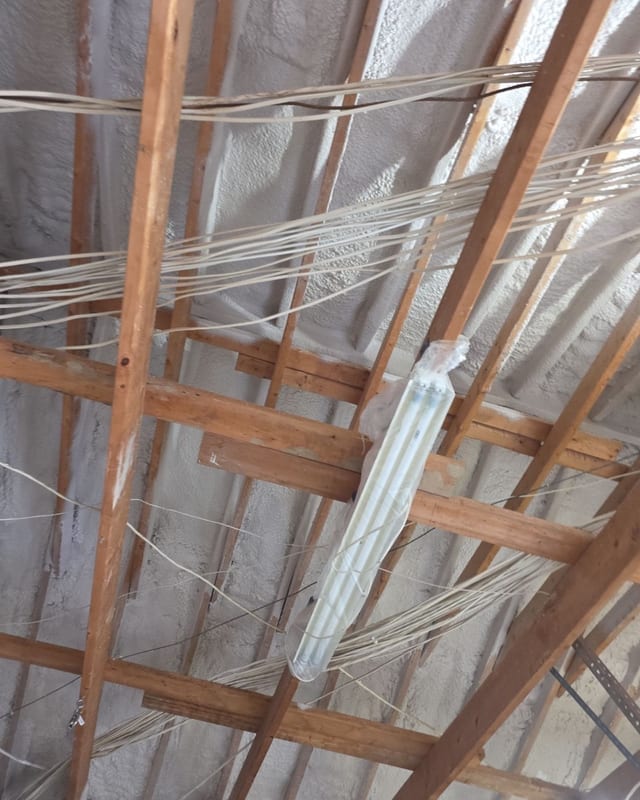
Two things get settled before foam goes on a roof deck. The first is the roof itself. A roof that leaks, or a deck that's already wet, gets fixed before it's covered. The second is what the foam is covered with. The Ontario Building Code requires spray foam in occupied spaces to be covered by a thermal barrier such as drywall, or by an approved coating where drywall isn't practical. We flag exactly what your space needs as part of the quote, so nothing is a surprise at inspection.
What's already up there decides the order
Spray foam attic insulation needs a clean surface to bond to. Our FAQ answers the question we get most: can you spray over existing insulation? Sometimes, but usually not in an attic. Old, contaminated or wet insulation should come out first, so the foam bonds properly and the problems underneath get fixed.
Those problems are real. Our insulation removal page lists leaks, disconnected bath fans, blocked soffit vents and rodent entry points as things you can only find with the old insulation out. If you've had a roof leak or mice, assume the insulation is affected until someone has looked. Most residential attic removals are a one-day job, and the re-insulation follows right after or the next day.
What the day looks like
Cured foam is an inert plastic. The precautions belong to the installation: the space is ventilated, the crew wears supplied-air respirators, and you stay out during application and for the manufacturer's re-entry period. We tell you the re-entry time for your job before we start. For an attic on a house you're living in, we schedule it so you're usually back in the same day.
Before any foam is mixed, everything that shouldn't be sprayed gets masked. Afterwards the excess is trimmed, coverage is checked, and the masking and debris leave with us.
Ice on the eaves, a cold room upstairs, or a quote that foams the whole roof and you're not sure why? We'll get into the attic and tell you where foam earns its cost. Call (705) 812-1955 or request a free quote.