

Cellulose vs Fiberglass Blown In Insulation
Both work. The prep decides it.
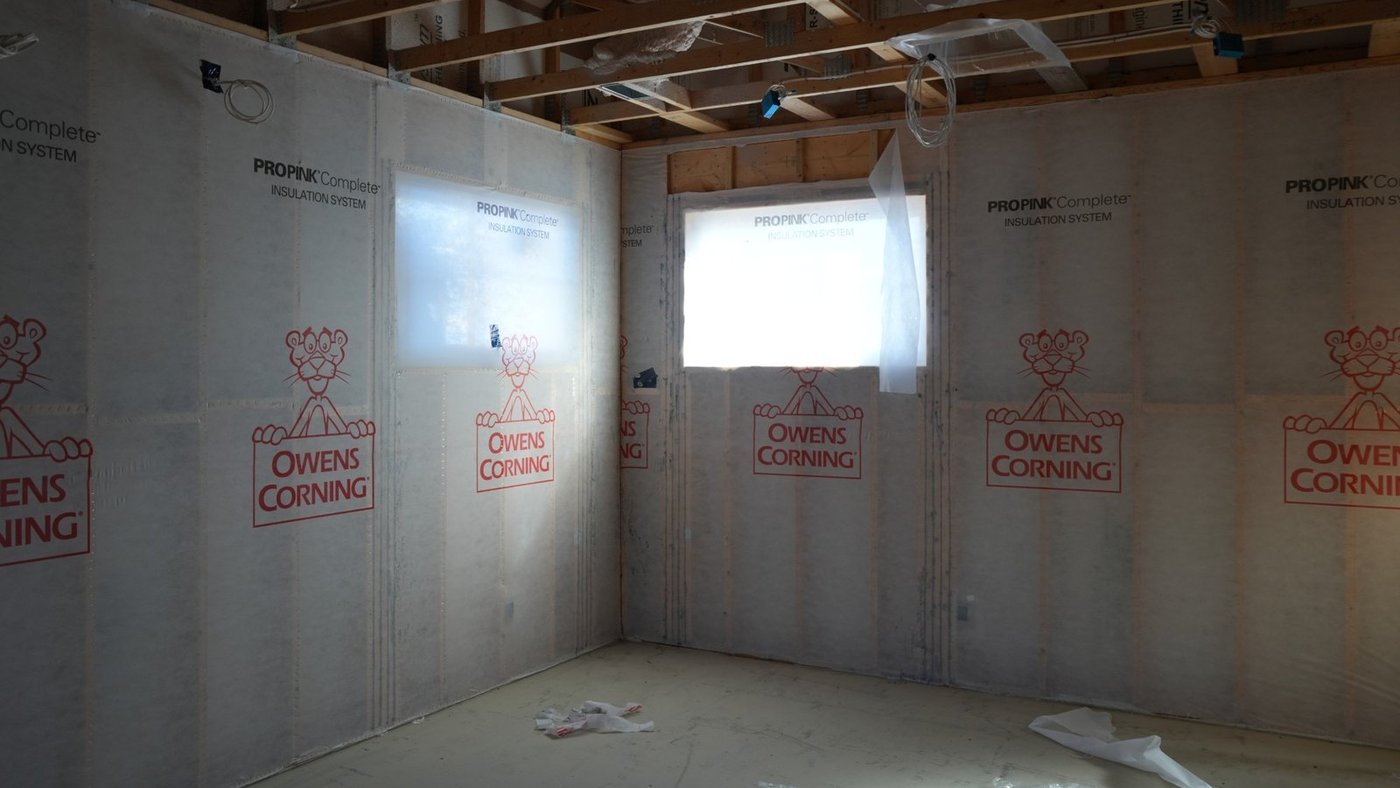
Cellulose vs fiberglass blown in insulation is a closer contest than either side's sales sheet suggests. In an open attic, both do the job well, and the difference between them is smaller than the difference between an attic that was air sealed first and one that wasn't.
So this is the honest version. What each product is, where each one has a real edge, and the three things that matter more than which bag goes in the blower.
What each one actually is
Cellulose is shredded newsprint treated with chemicals that resist fire and fungal growth and inhibit corrosion. That is how Natural Resources Canada describes it in Keeping the Heat In, its guide to insulating a house. It has been regulated in Canada since 1979 and has to meet performance standards for flammability.
Blown fiberglass is the same glass fibre that goes into batts, chopped up so it can be blown or poured instead of cut and fitted. It is what we blow. Our blown-in system is fiberglass, in attics as loose-fill and in walls packed to density behind netting.
Both are loose fibres. Both flow around joists, wiring and the odd framing that a batt has to be cut around. That shared strength is why the attic top-up is almost always a blown job, whichever one you pick.
Cellulose vs fiberglass blown in insulation, inch for inch
NRCan's insulation table puts blown cellulose, measured at its settled thickness, at about R-3.6 per inch. Blown fiberglass loose-fill comes in at about R-2.9 per inch. Both figures are averages across products, and each one has a range that overlaps the other.
On paper cellulose wins by a little. In an attic it rarely decides anything, because you are not buying inches. You are buying a target, and the installer blows whatever depth that product needs to reach it. A fiberglass attic sits a little deeper than a cellulose one at the same rating. Unless the space under the roof deck is tight at the eaves, that costs you nothing.
NRCan also notes that the amount of material needed for a given rating depends on the product and on whether it is blown or poured. The bag's own coverage chart is the number that counts. A good installer works from it, and you can ask to see it.
Cellulose vs fiberglass blown in insulation: settling, dust and air
This is where the two really differ, and none of it makes either one a bad choice.
- Settling. NRCan's advice on cellulose is to make allowance for settling, and its R-value figure is measured at the settled depth for that reason. Cellulose is installed deeper than its final depth on purpose. Fiberglass goes in at a lower density: NRCan's dense-pack figure for it is about 2.5 lb per cubic foot, against 3.5 for cellulose.
- Dust. Blowing cellulose can create a lot of dust, in NRCan's words. That matters if the attic hatch is in a bedroom closet.
- Air movement. Cellulose packed into an empty, closed cavity at dense-pack levels, around 3.5 lb per cubic foot, adds some air sealing. Blown over existing insulation in an attic, NRCan says it offers limited additional air sealing.
- Moisture. The blown fiberglass we install does not absorb moisture, so it does not lead to mould and mildew problems.
Read that list again and notice what is missing: a winner. Each product has a trade-off, and each trade-off is managed by installing it properly.
What matters more than the product
Three things decide an attic job more than the fibre does.
Air sealing first. Glass and mineral fibre are poor air sealing products, and NRCan is blunt that stuffing them into gaps to stop leaks doesn't work. Cellulose over an existing attic floor doesn't do much better. Warm, humid air escaping into a cold attic loses you heat on the way out and drops its moisture on the first cold surface it meets. That is how you get frost on the sheathing, damp insulation and ice on the eaves. Piling more insulation on an unsealed attic floor is a thicker sweater with the zipper down.
The full depth, everywhere. Settled insulation can be at half its original depth after a few decades. We measure what is up there, quote the top-up to current code, and put depth markers up in the attic so you can see what was blown. The eaves need baffles so the new depth doesn't block the soffit vents, and the attic hatch needs its own insulation and weatherstripping.
Clearances. NRCan's safety warning applies to both products equally: never let insulation touch a chimney or combustion vent, an exposed recessed light fixture or old knob and tube wiring.
Can new blown-in go over what is already there?
Usually, yes. Topping up over dry, clean insulation is the normal job. If what is up there is wet, contaminated or pest-damaged, it comes out first. Our post on attic top-up or removal walks through how we decide, and old pebbly loose-fill is its own question, covered in our post on vermiculite.
Walls are a different question
In a finished wall, loose fibre has to be packed tight or it slumps and leaves a cold strip at the top of the cavity. NRCan notes that most loose-fill installed in walls settles unless it goes in at the right density.
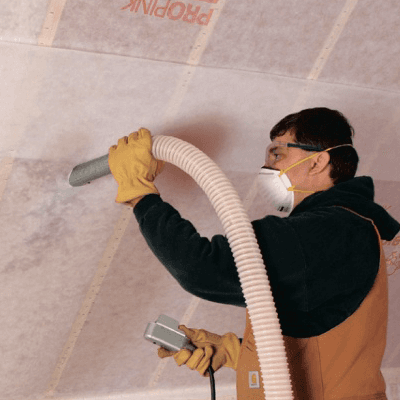
For finished walls we drill and fill with blown fiberglass through 2-inch holes, usually from inside, then plug and patch. Dense-packed cellulose is another way the trade does the same job. In both cases the density is what you are paying for, more than the fibre.
When the cheaper option does the same job
An open attic with room above the joists is the easiest insulation job in the house, and either loose-fill does it well. You don't need spray foam there. Foam earns its price at rim joists, crawl spaces, cathedral ceilings and attic bypasses. Over a sealed, open attic floor, blown-in gives you most of the real-world gain for a lot less than foam.
The same goes for removal. If the insulation up there is dry and clean, it stays, and you pay for the top-up only. If a cheaper product will do the same job in your house, we will tell you.
Blown-in attics around Lindsay
We work through Lindsay and the rest of the Kawartha Lakes area, where the job is very often a cottage that was never built for winter and is now lived in year-round. Those places tend to be expensive to heat on propane or electric baseboard.
The cellulose vs fiberglass blown in insulation question matters less there than what is under the roof: an attic floor that leaks, insulation that has settled to a fraction of its depth, and a hatch nobody has touched. For the parts a blower can't reach, such as a cathedral ceiling with no room in the rafter bay, our post on four-season cottage insulation covers the options.
Cellulose vs fiberglass blown in insulation: how to choose
If your attic is open and dry, the air sealing gets done first, and the installer blows to the target depth from the bag's chart, you will be well served by either product. Pick on the installer, not the fibre. Ask what depth they will blow, how they will seal the attic floor, whether the eaves get baffles, and what happens at the hatch. Those four answers tell you more than the brochure.
Want to know what is actually in your attic? Call (705) 812-1955 or request a free quote. We will go up, measure it and tell you what it needs.