

Is Spray Foam Insulation Safe
Safe to live with. The care goes into the day it is sprayed.
Is spray foam insulation safe? Once it has cured, yes. Cured polyurethane foam is an inert plastic, and living in a house insulated with it is not a hazard.
The honest answer has a "when" in it, though. The risk sits in the hours the foam is being sprayed, and in who sprays it. Get those two things right and the rest of the worry mostly goes away.
Is spray foam insulation safe once it has cured?
Spray foam arrives as two liquids. They're mixed at the gun, react on contact, expand in seconds and set into a rigid foam bonded to whatever it was sprayed on. When that reaction is finished, what is left in your wall or rim joist is plastic. It doesn't shed fibres, it doesn't settle, and it doesn't keep releasing chemicals into the house for years.
That last one comes up on almost every call. Properly mixed and applied foam cures within hours and is stable after that. The product we spray is Polarfoam 7300-0 SOYA, a 2 lb closed-cell foam made by PFSI, with soya-based content in place of part of the petroleum-based polyol and zero ozone-depleting substances.
So the question to ask isn't really "is spray foam insulation safe?" It's "was it mixed and sprayed properly, and did everyone stay out until it was done?"
Where the real risk is: the hours it is being sprayed
One of the two liquids contains MDI, a family of chemicals used to make polyurethane. Health Canada's page on MDI substances says two-chamber spray foam products may cause breathing problems and skin sensitivities. That is a statement about exposure while the foam is going on, not about foam that has cured.
Which is why a spray day looks the way it does:
- Ventilation goes in first. It is set up before any foam is mixed, not switched on halfway through.
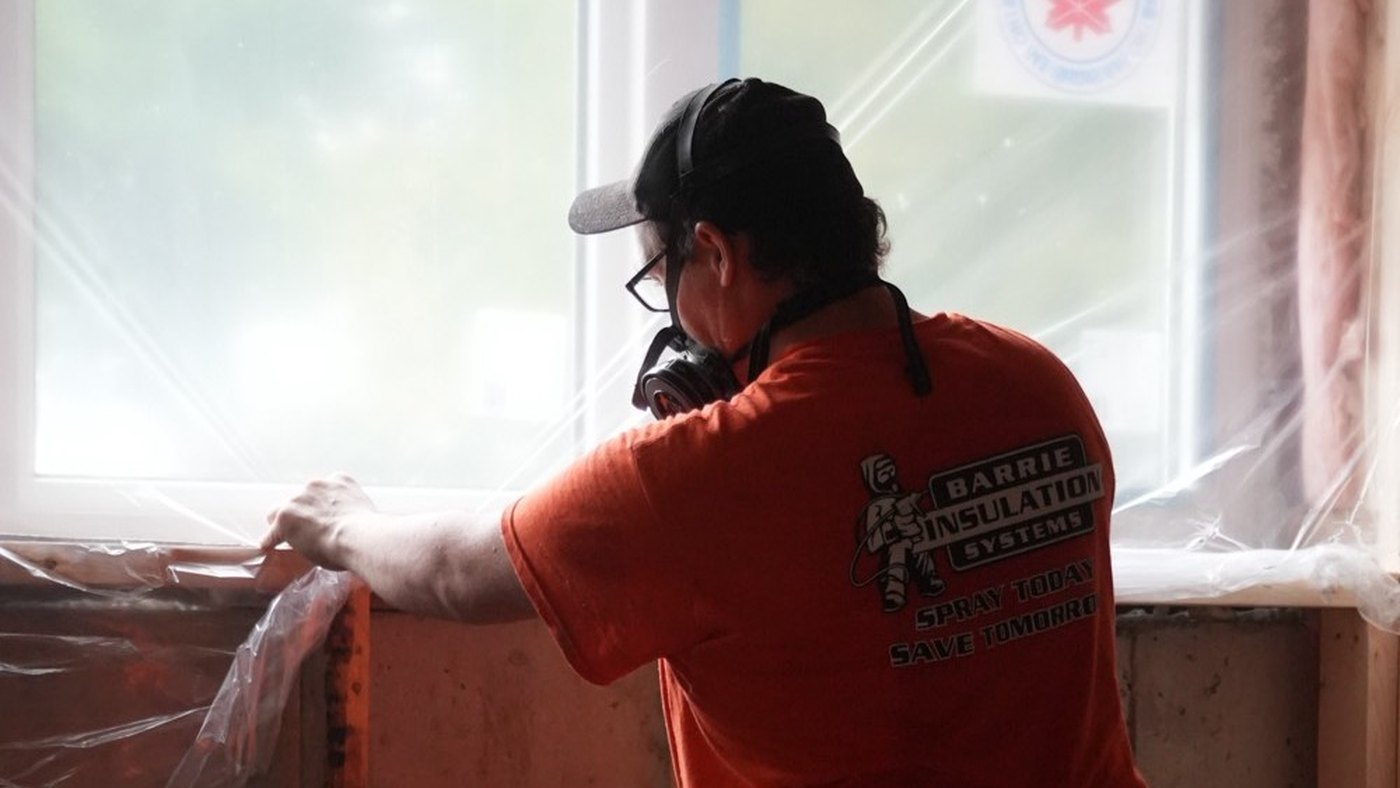
- The crew wears supplied-air respirators and full protective equipment while spraying.
- Everyone else is out. You, your kids, your pets and any other trades leave the work area during application. The US EPA's guidance on spray foam says the same thing: only workers in the right protective equipment should be present while it is installed.
- Anything that shouldn't get foam on it is masked before the spraying starts.
None of that is unusual. It is what spraying foam safely involves, and you should expect to see all of it.
The re-entry period, and where the number comes from
You go back in when the re-entry period has passed, and that period isn't a single number for every foam. It depends on the product, how thick it went on and how well the space is ventilated. The EPA puts it plainly: re-entry depends on the formulation and anything else that affects how fast the foam cures. The figure comes from the manufacturer of the product on your job.
We give you the manufacturer's re-entry time for your job before we start, and we schedule the work around it. For most basements and attics on an occupied house, that means you're back in the same day. If anybody quotes you a re-entry time without naming the product they're spraying, ask them which foam it is.
Builders scheduling other trades around a spray crew face the same clock from the other side. Our post on how long spray foam takes to cure covers that version.
Is spray foam insulation safe for kids, pets and people with asthma?
Yes, once it's cured and the space has been ventilated. The extra care goes into spray day. The EPA singles out children with asthma as an especially vulnerable group, partly because kids are on the floor, touching whatever dust has settled.
So if someone in the house has asthma or chemical sensitivities, say so when we quote. Plan for them to be out for the whole re-entry period, not just the spraying, and make sure the area has been cleaned up before they're back in it. Pets follow the same rule as people.
Off-ratio foam: the one long-term problem worth worrying about
There is a real way for spray foam to go wrong, and it isn't the product. It's the mix.
The two components have to meet at the right ratio and the right temperature. Bad equipment, the wrong temperatures or an untrained installer can produce off-ratio foam, which doesn't cure the way it should. That one is a genuine problem, and it is very difficult to fix after the fact.
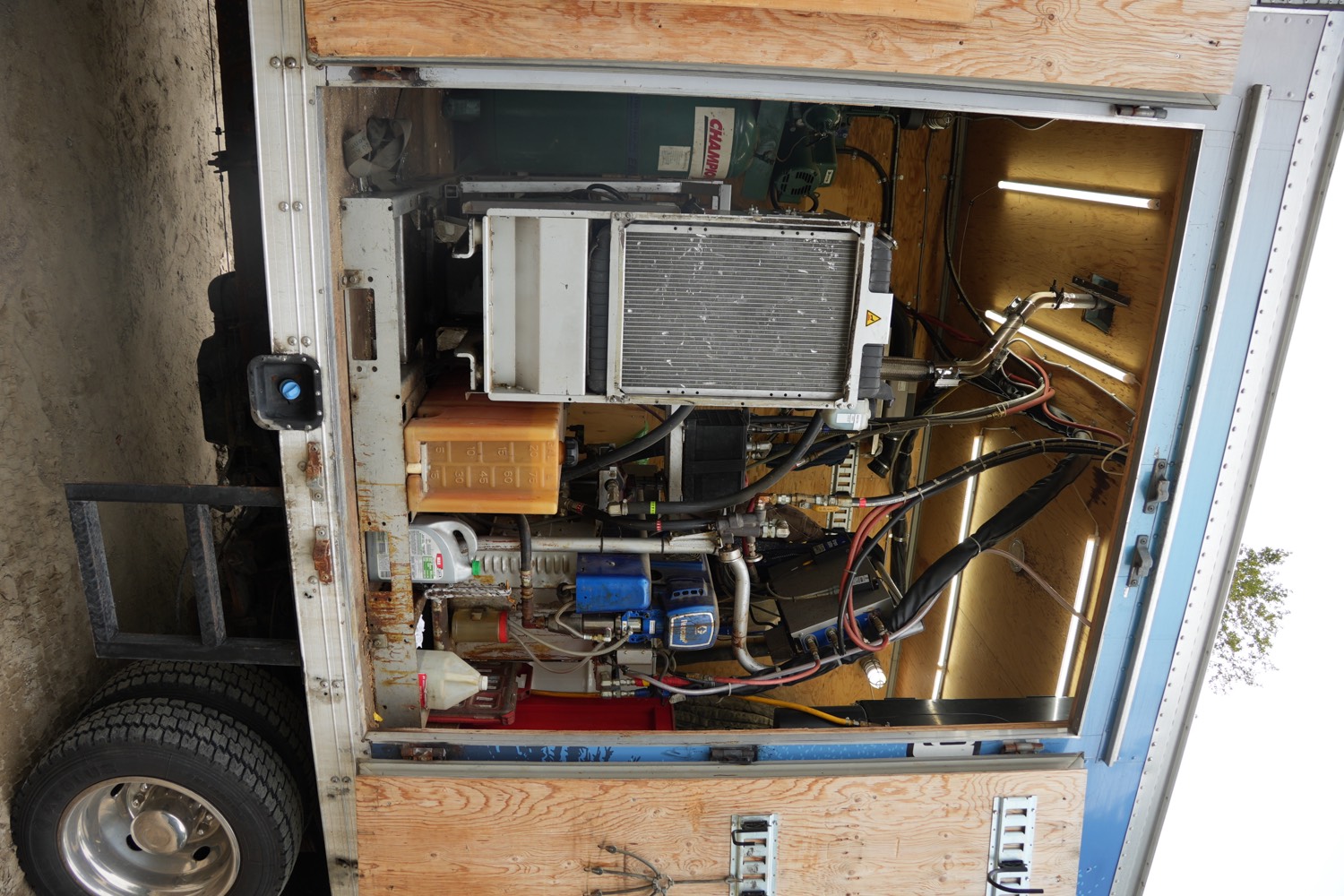
This is exactly what the installation standard is for. CAN/ULC-S705.2 is the Canadian standard for applying spray polyurethane foam on site, and it isn't a sticker on the product. It requires trained, certified installers, controlled substrate and air conditions, documented lift thicknesses and a daily quality record. We spray under S705.2 with certified applicators.
Ask any contractor for their certification number before you let foam into your house. That one question filters out most of what goes wrong with spray foam.
Is spray foam insulation safe if it still smells?
Spray day smells. That's normal while the foam is going on and curing, and it's part of why the space is ventilated and you're out of it.
A smell that hangs on after the re-entry period is not something to live with. The EPA's advice for continuing odours is to go back to the contractor and have them confirm that the right procedures and clean-up were followed. Have it looked at rather than airing the room out and hoping.
Fire: why foam in your living space gets covered
Spray foam is a plastic, and the building code treats it that way. In occupied spaces, the Ontario Building Code requires foam to be separated from the interior by a thermal barrier, usually drywall, or an approved coating where drywall isn't practical.
That's a code requirement, not an optional upgrade, and it's checked at inspection. We flag what your space needs as part of the quote, so nothing is a surprise at inspection. Our post on the thermal barrier over spray foam goes into which spaces need what.
When you don't need spray foam at all
Safety worries shouldn't be what decides it, but you also shouldn't be talked into foam where something cheaper does the same job. Spray foam earns its price where you need an air and vapour barrier, high R-value in a shallow space, or a seal on an irregular surface: rim joists, crawl spaces, cathedral ceilings, attic bypasses.
Standard cavities you want filled completely, or finished walls you don't want to open, are often a job for blown-in BIBS. Open, clean, standard framing where budget matters most is a job for batt. Most houses we quote end up with a combination. If a cheaper product will do the same job in your house, we will tell you.
Five questions to ask before anyone sprays your house
- What is your CAN/ULC-S705.2 certification number?
- Which product are you spraying? By name, not "closed-cell foam".
- What is the re-entry time for this job? Before the job, not after.
- How will the space be ventilated, and who needs to be out, for how long?
- What thermal barrier does this space need, and who is putting it on?
A contractor who answers all five without hesitating is one you can trust with the spray day.
Want those five answers for your own house? Call (705) 812-1955 or request a free quote, and we will come and look at the space first.