

undefined
The frost is a map of where the house leaks.
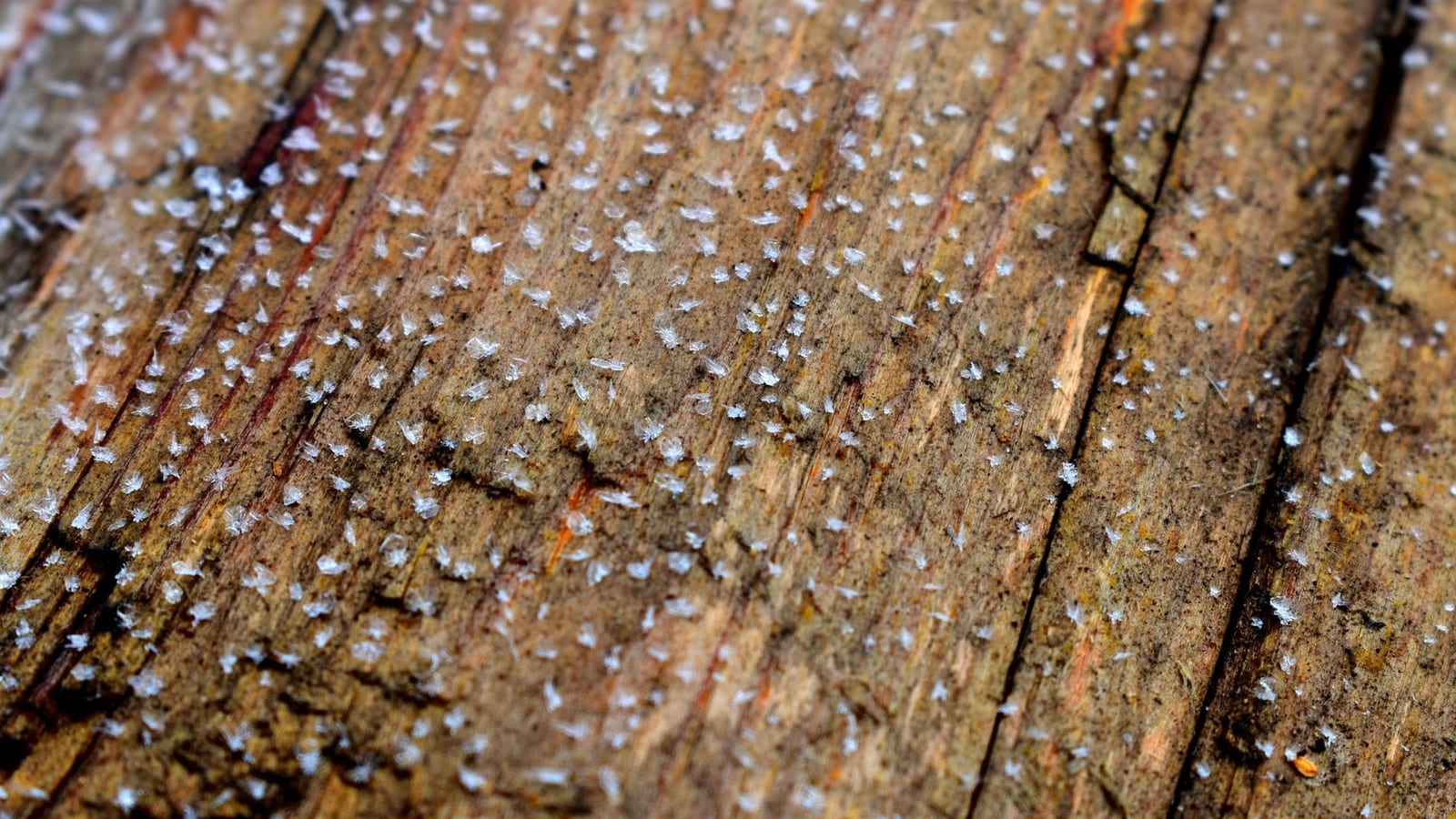
Frost in attic sheathing is water from inside your house. It isn't a roof leak, and it isn't snow blowing in through the vents. It is the moisture from showers, cooking and breathing, carried up through gaps in the ceiling and frozen onto the coldest wood in the building.
Most people find it by accident: a trip into the attic for the Christmas boxes in January, a flashlight on the roof boards, and the whole underside of the roof furred white. In Dunsford and the rest of the Kawartha Lakes, the job is very often a cottage that was never built for winter and is now lived in all year, which is exactly the kind of building where it shows up. The frost is worth reading before you do anything about it, because where it sits tells you where the house is leaking.
Where frost in attic sheathing comes from
Warm air rises. In winter the whole heated house pushes up against the ceiling, and wherever the ceiling has a gap, that air goes through it. A gap around a plumbing stack, an attic hatch that just rests on its trim, the top of an interior wall, a pot light. Each one is small. Together they add up, and the house is pushing air through all of them at once, all winter.
The air that gets through is warm and it is carrying moisture. In the attic it meets wood that is close to the outdoor temperature. The moisture comes out of the air as frost on the coldest surface it touches, which is the underside of the roof sheathing. Roofing nails that poke through the deck are colder still, so the frost usually starts on the nail tips and spreads from there.
Our own FAQ puts it in one line: warm, humid indoor air escaping into a cold attic loses you energy on the way out and drops its moisture when it hits a cold surface, which is how you get frost on the sheathing, damp insulation and ice damming.
The frost isn't the damage. It's water in storage. On the first mild day it melts, and the water drips straight down into the insulation and onto the ceiling below. That is the stain that appears in March on a ceiling nobody touched, in a house where the roof checks out fine.
How much is too much
Natural Resources Canada's renovation guide, Keeping the Heat In, suggests checking the attic during or just after a cold snap, because that's when condensation shows up as frost. The guide says some frost is to be expected. A heavy buildup, 10 mm or more, is a reason to look harder.
So a light dusting on the nail tips after a week of minus 25 isn't an emergency. A white coat across the whole deck, frost thick enough to scrape, or wet and darkened sheathing in a thaw, is a house sending a lot of water upstairs.
Read the frost before you fix anything
Frost in attic sheathing is rarely even. It collects where the warm air comes up, so a flashlight and five minutes on a cold morning will usually point at the source. Take photos; they're the most useful thing you can show anyone you call.
- A heavy patch over one bathroom. Look for the bath fan duct. If it ends in the attic, or has come apart from the roof or wall hood, every shower is going straight onto the roof boards. Our post on a bath fan venting into the attic covers that one in detail.
- Frost right above the hatch. A hatch that sits loose on its trim with no weatherstrip is an open door at the top of the house. The attic hatch insulation post shows the fix, and it's one of the cheapest jobs in the attic.
- Lines of frost along the interior walls. The top plates of interior walls are open to the wall cavities below, and the drywall seam along them is rarely sealed. Frost that follows the wall layout underneath usually means the top plates.
- Rings around fixtures, stacks and the chimney. Every pot light, plumbing vent and wiring hole is a gap in the ceiling. A chimney chase is often the biggest single opening in an older house. The pot light post explains why the fixtures leak even when the box says airtight.
- Frost heaviest near the eaves. If insulation has been stuffed into the soffits, the intake air the attic depends on can't get in. Baffles at the eaves are what keep that path open.
- An even coat everywhere, with no obvious hot spot. That points less at one gap and more at the house itself: indoor humidity running high, and a ceiling that leaks a little everywhere.
Check the insulation while you're up there. Damp, matted or dark patches under the worst of the frost tell you the melt has already been landing on it.
Why more insulation won't fix frost in attic spaces
The instinct is to add insulation, and on its own it makes things worse. NRCan explains why. More insulation on the attic floor makes the attic colder, and a colder attic means any moisture that does get up there condenses sooner, before the ventilation can carry it away. The guide's advice is to air seal the attic to stop the moist air getting in, and not to rely on batt, blown-in or poured insulation to do that job.
Fibreglass and cellulose slow heat. They don't stop air. Warm air moves straight through a deep layer of loose fill the same way it moves through a sweater, which is the comparison in our FAQ: piling material onto an unsealed attic floor is like putting on a thicker sweater with the zipper down. Air sealing first, then insulation depth, is the order that produces results.
More vents aren't the answer either. Ventilation is there to carry off the small amount of moisture that gets into any attic. It can't keep up with a ceiling that leaks heavily, and a powered attic fan can make it worse by lowering the pressure in the attic and drawing more house air up through the same gaps.
The humidity half of the problem
Frost in attic sheathing needs two things: a gap, and moist air to push through it. The gap is usually the bigger lever, but the moisture is worth a look too.
- Fans that don't run long enough. A bath fan switched off as you leave the room leaves most of the shower's steam behind.
- No range hood, or one that just recirculates. Cooking puts a lot of water in the air.
- Firewood, laundry or a damp crawl space. Wood drying indoors, clothes on a rack all winter, and an earth-floored crawl space under a cottage all add moisture the house has to get rid of somewhere.
- Windows running with condensation. If the glass is wet every morning, there's enough moisture in the house to feed the attic too.
The weekend place has its own version. A Dunsford cottage left at a low setting all week, then warmed up on a Friday night for a full house, puts a lot of moisture into the air in a hurry, on exactly the nights the attic is at its coldest. It's the same kind of building our Kawartha Lakes page describes: a place that's expensive to heat and takes a full day to warm up when you arrive.
What fixes frost in attic sheathing, in order
Doing these out of order costs money, because each step either reveals or buries the next one.
- Look. Get into the attic on a cold day and read the frost, as above. We do the same thing on a free assessment: get into the attic, measure, check the assemblies and find the actual air leaks.
- Take out what's ruined. If the insulation is wet, mouldy or contaminated, it comes out rather than getting buried. Our insulation removal page says leaks, disconnected bath fans, blocked soffit vents and rodent entry points are only findable with the insulation out. That makes removal the one chance to see the whole ceiling.
- Seal the ceiling. Top plates, the hatch, stacks, wiring holes, fixtures and the chimney chase. Our spray foam page describes the job as sealing the attic floor and its bypasses before topping up.
- Fix the fans. Every bath and range fan ducted properly to the outside, with a hood that closes.
- Open the eaves. Baffles so the soffit intake isn't buried when the new insulation goes in.
- Then insulate. To a current, even depth. Our blown-in attic top-ups go in with depth markers, so anyone can check the depth later.
If the insulation that's there is dry and clean, it can usually stay. The frost may have soaked the material directly under the worst patch and left the rest of the attic fine, and that is a smaller job than clearing the whole space.
The cheaper fix is usually the right one
For most attics with frost in them, the answer is air sealing, ducting the fans, baffles and a blown-in top-up. Our blown-in page says it plainly: for large open attic areas, blown-in gives you most of the real-world performance gain for a lot less than foam. In an ordinary vented attic, with the ceiling sealed underneath it, that solves the problem.
Spraying the roof deck does have its place. It brings the attic inside the building, which makes sense where there's ductwork or equipment up there, or on a cathedral ceiling with no room for a vented space. It isn't the default for an attic that frosts because of a loose hatch and a disconnected fan. If a cheaper product will do the same job in your house, we will tell you.
If you've found it this winter
- Don't scrape it. You'll knock it into the insulation, where it melts in one place instead of drying slowly.
- Check that the bath fans actually reach outdoors. Run each one and feel for airflow at the outside hood. No airflow at the hood means it's ending somewhere else.
- Run the fans longer and the humidifier less. It won't fix the leak, but it lowers what's feeding it.
- Watch the ceilings in the first thaw. A stain right after a mild spell, with no rain on the roof, is the frost melting.
- Get it looked at while it's there. An attic is easiest to diagnose while the frost is still showing where the air comes up.
We work in Dunsford, Lindsay and across the Kawartha Lakes, as well as Barrie and Simcoe County. We come out, look at the actual building and give you a written price, and the assessment is free. Start with a quote request and, if you can, send the photos from the attic.